Home
Haptic-Guided Bone Resection
Haptic-Guided Bone Resection for Unmatched Surgical Precision
Haptic-Guided Bone Resection is an advanced robotic knee technology that uses tactile feedback (haptics) to guide precise bone preparation during knee procedures. At Roboknee, this innovation enhances accuracy, protects healthy bone, and supports optimal joint alignment for better long-term outcomes.
Controlled Bone Precision Through Robotic Haptic Feedback
By combining robotic assistance with real-time haptic feedback, Roboknee ensures bone resection is performed only within pre-planned boundaries. This technology allows surgeons to work with exceptional control, accuracy, and confidence while preserving natural bone structure.
How Haptic-Guided Bone Resection Works
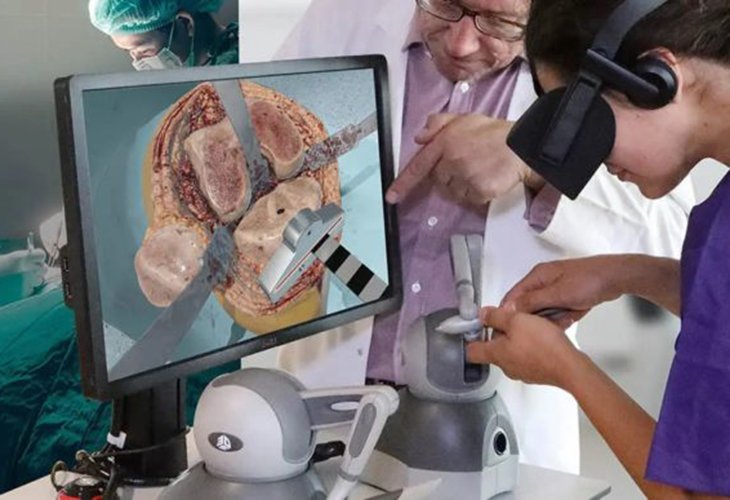
Haptic-Guided Bone Resection uses intelligent robotic systems that provide tactile resistance and feedback to the surgeon during bone preparation. The robotic arm is programmed using a patient-specific plan, ensuring that bone removal is limited to the exact area required for correction or implant placement.
When the surgeon approaches the predefined boundary, the haptic system creates resistance, preventing unintended bone removal. This results in highly accurate cuts, improved joint alignment, and better preservation of healthy tissue. At Roboknee, this technology significantly reduces human error, enhances surgical precision, and improves functional outcomes for patients undergoing advanced knee treatment.