
Home
Robotic-Assisted Soft Tissue Balancing
Robotic-Assisted Soft Tissue Balancing for Stable, Natural Knee Movement
Robotic-Assisted Soft Tissue Balancing is an advanced technique that fine-tunes the ligaments and surrounding soft tissues of the knee using robotic precision. At Roboknee, this technology improves joint stability, reduces pain, and restores smooth, natural knee motion.
Perfecting Knee Stability Through Intelligent Robotic Precision
By accurately assessing ligament tension and joint gaps in real time, Roboknee ensures balanced soft tissues around the knee. This personalized approach enhances comfort, improves alignment, and supports long-term joint health—especially during advanced knee replacement procedures.
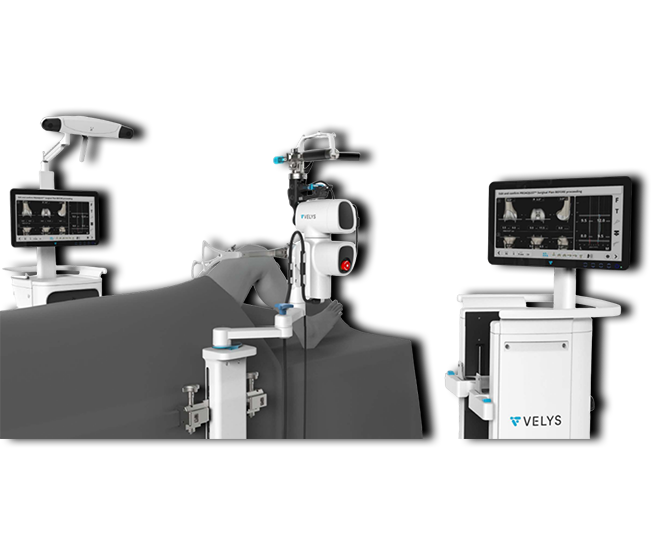
How Robotic-Assisted Soft Tissue Balancing Works
Soft tissue balance plays a critical role in knee function. If ligaments are too tight or too loose, the knee can feel unstable, painful, or stiff—even after surgery. Traditional methods rely heavily on manual judgment, which may lead to uneven results.
Robotic-Assisted Soft Tissue Balancing at Roboknee uses intelligent robotic systems to measure ligament tension and joint spacing with high precision throughout the knee’s range of motion. Based on real-time feedback, surgeons can make accurate adjustments to achieve optimal balance. This results in improved knee stability, better alignment, reduced implant wear, and a more natural-feeling knee after treatment.